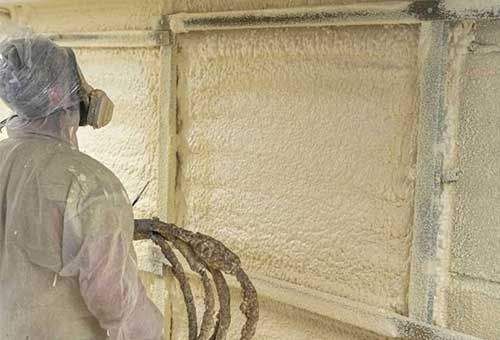
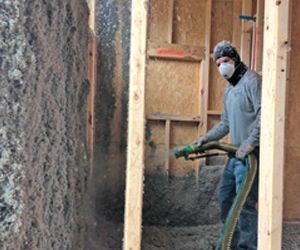
So what’s the fix? It’s not just adding insulation. It’s understanding how R-values in Tennessee insulation and air sealing for energy efficiency work together as a system.
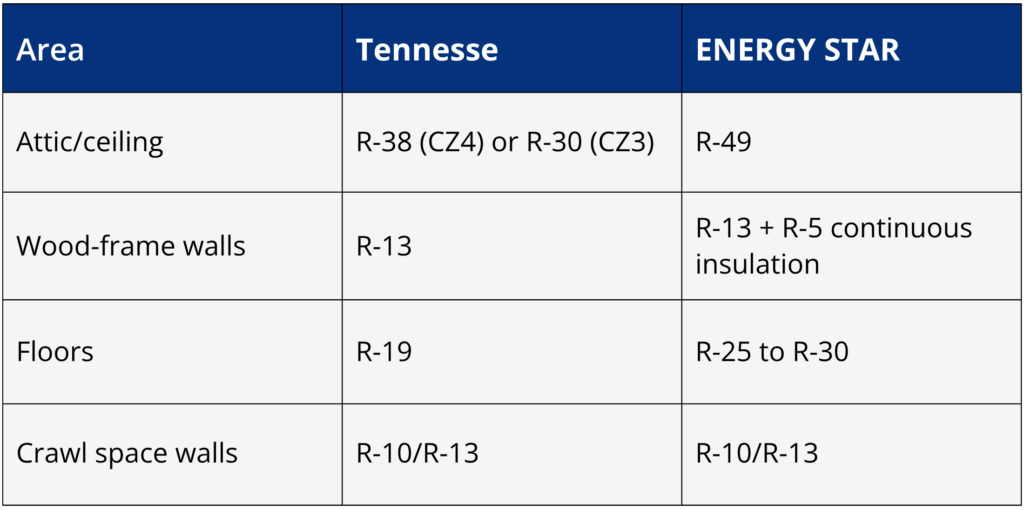
Tennessee’s amended 2018 IECC requires R-38 in attics (Climate Zone 4) or R-30 (Climate Zone 3), R-13 in wood-frame walls, and R-19 in floors. ENERGY STAR recommends R-49 in attics, R-13 plus R-5 continuous insulation in walls, and R-25 to R-30 in floors over unconditioned spaces. But insulation alone isn’t enough. Without proper air sealing, conditioned air escapes through gaps around pipes, light fixtures, and top plates, forcing your HVAC system to work harder. Combining insulation upgrades with air sealing can reduce heating and cooling costs by an average of 15%.
Not sure where your home stands? A professional evaluation can reveal exactly where your Tennessee home is losing energy.
What Tennessee’s Code Actually Requires
Code Minimum R-Values for Tennessee’s Climate Zones
Tennessee follows the 2018 IECC with state amendments
that rely on older insulation tables from the 2009 IECC. That means requirements are lower than many homeowners expect.
For IECC climate zone 4 areas like Murfreesboro, Nashville, and Knoxville:
- Attic/Ceiling: R-38
- Wood-frame walls: R-13
- Floor: R-19
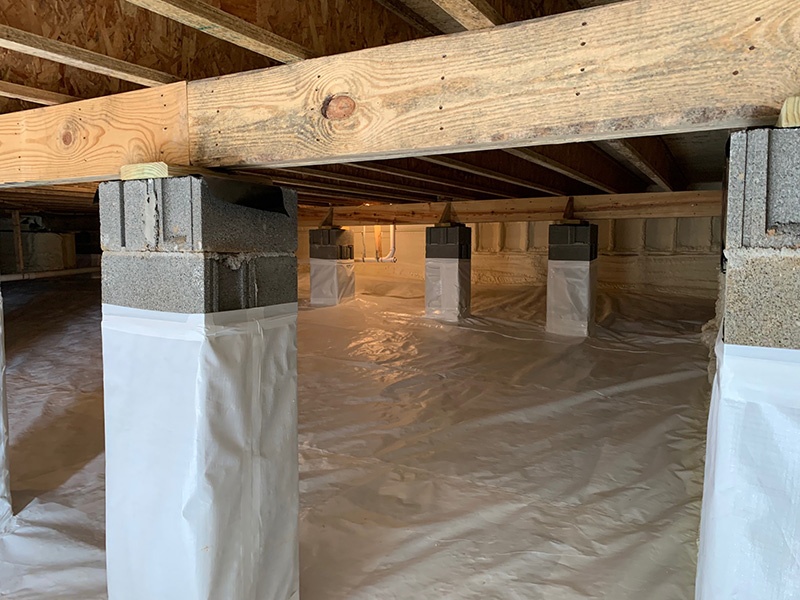
- Basement/Crawlspace walls: R-10 or R-13
For Climate Zone 3 areas like Memphis and western Tennessee:
- Attic/Ceiling: R-30
- Walls: R-13
- Floor: R-19
- Crawlspace walls: R-5 or R-13
These are the official Tennessee insulation requirements, but they only represent the minimum required by code. The DOE’s insulation guide
confirms that R-value requirements vary by climate zone and building component, and that the installed R-value depends on material type and thickness.
What “Minimum” Really Means
Code minimums are the floor, not the goal. They represent the lowest-performing insulation
a builder can install and still pass inspection. They’re designed to meet basic compliance, not maximize comfort or efficiency.
They also don’t account for real-world performance. A home can meet every requirement for attic insulation R-value Tennessee standards and still feel drafty, uneven, and expensive to heat and cool. That’s because they don’t account for Tennessee’s wide temperature swings – from summer highs above 95°F to winter lows well below freezing and because it doesn’t address air leakage.
Why Air Sealing Matters as Much as R-Value
Insulation slows heat flow, while air sealing stops air movement. A home needs both.
Even high R-value Tennessee insulation can’t perform properly if air is moving through it. Gaps around wiring, ductwork, top plates, and recessed lighting allow conditioned air to escape and outside air to enter.
That’s why the Department of Energy
emphasizes combining insulation upgrades with air sealing. Without sealing, adding insulation is like wearing a sweater full of holes.